
The universe is full of things we can’t see. Invisible waves ripple through space. Tiny particles pass through us by the trillions. Yet, scientists have found ways to detect, measure, and even “see” the unseen. Their discoveries reveal forces, structures, and phenomena that shape reality itself, from the smallest atom to the vast cosmos. Here’s a look at the pioneers in Physics and Astronomy who allowed us to see the unseen and their groundbreaking work.
- Understanding the Quantum Universe
- Galileo Galilei — The First Eyes on the Cosmos
- Marie Curie — Radioactivity and the Invisible Atom
- Albert Einstein — Revealing the Invisible Forces
- Niels Bohr — Quantum Worlds Made Visible
- Vera Rubin — Dark Matter’s Hidden Hand
- Hans Bethe — How Stars Shine
- Subrahmanyan Chandrasekhar — The Life of Stars
- LIGO Scientists — Listening to the Cosmos
- Cecilia Payne-Gaposchkin — The Stars’ Hidden Chemistry
- Edwin Hubble — Expanding the Universe
- Into the Invisible
Understanding the Quantum Universe
Before we meet the pioneers, it helps to understand a few key terms.
- Quantum Physics —The study of the tiny things in the universe: electrons, atoms, photons. Imagine trying to understand how every piece of a Lego set behaves, even the ones you can’t see.
- Quantum Mechanics — The rulebook that explains how these tiny pieces behave. It’s the math and formulas that scientists use to predict outcomes.
- Quantum Theory —The big-picture ideas about how the quantum world works. If quantum mechanics is the rulebook, quantum theory is the “story” that explains why the rules make sense.
Many people often use these terms interchangeably. So if you see “quantum mechanics” or “quantum theory” used where you’d expect “quantum physics,” don’t be confused. They’re usually referring to the same general realm of ideas.
In short, quantum physics is the study, quantum mechanics is the math, and quantum theory is the explanation.
Galileo Galilei — The First Eyes on the Cosmos
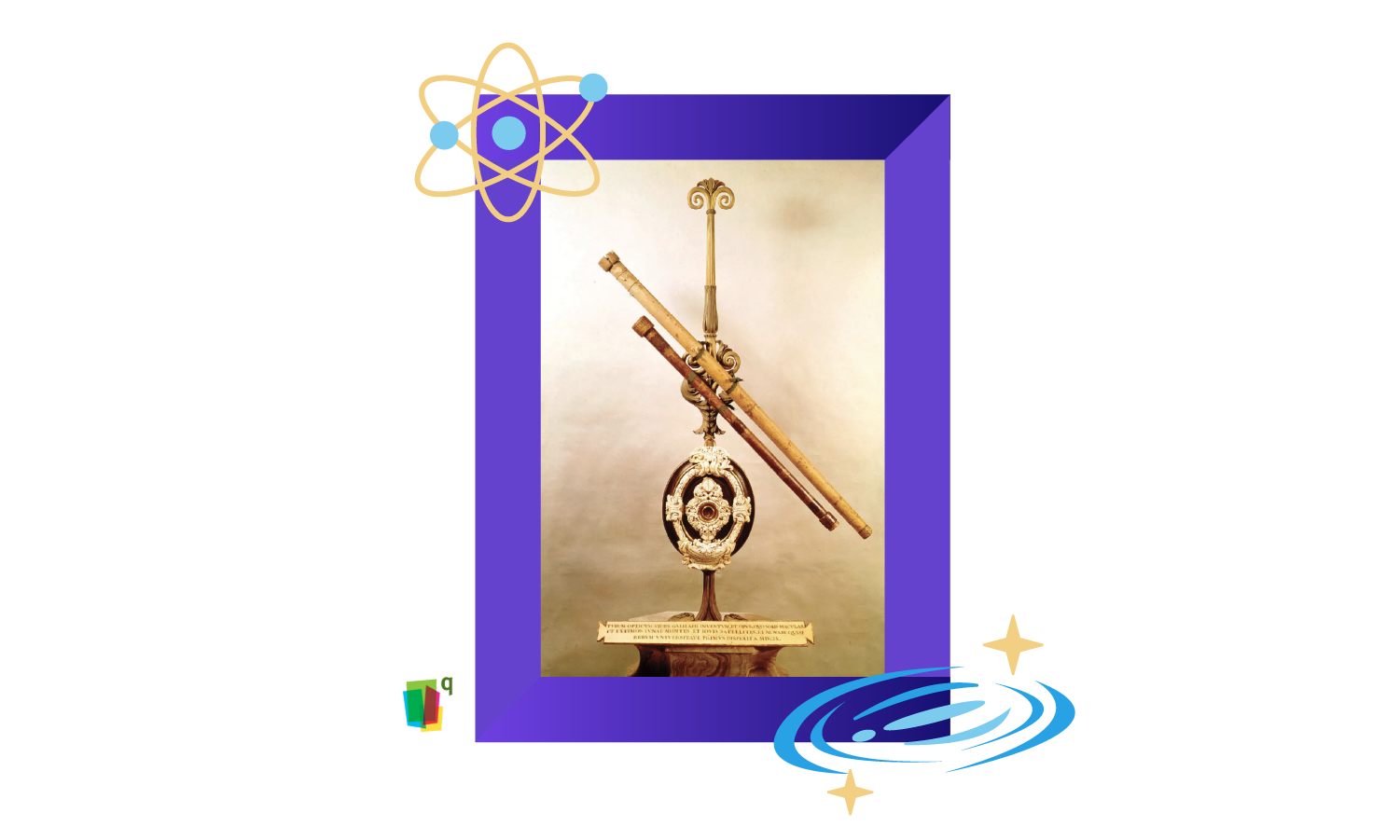
Italian astronomer and physicist Galileo Galilei was the first to systematically observe the sky with a telescope. Until then, people had only their eyes to rely on. With his simple telescope, Galileo noticed things no one had seen before: moons moving around Jupiter, dark spots drifting across the Sun, and mountains and craters on the Moon. These observations challenged long-held beliefs and helped shift our view of the universe.
Notable contributions
- Telescopic observations — Showed that Jupiter has moons, the Sun has spots, and the Moon has a rough surface.
- Supported heliocentric theory — Provided evidence that Earth orbits the Sun.
- Laid the groundwork for modern science — Showed the importance of careful observation and experimentation.
Marie Curie — Radioactivity and the Invisible Atom
Marie Curie, born in Poland, won two Nobel Prizes: Physics (1903) for work on radioactivity and Chemistry (1911) for discovering polonium and radium. She discovered the two new elements and showed that atoms are not solid and unchanging. Meaning, they can release energy and transform. Her discoveries opened the door to nuclear physics and medical treatments that help millions today.
Notable contributions
- Discovery of polonium and radium — Found new radioactive elements that helped us understand atomic energy.
- Coined the term “radioactivity” — Named the invisible energy emitted by atoms.
- Medical applications — Pioneered the use of radiation in cancer treatment.
- First woman Nobel laureate — Broke barriers for women in science.
Did you know? Curie sometimes carried radioactive samples in her pockets, oblivious to the dangers we understand today. Her prolonged exposure to radiation from her scientific research led to an illness, aplastic anaemia, and her death in 1934.
Albert Einstein — Revealing the Invisible Forces
German-born theoretical physicist Albert Einstein changed the way we understand light, energy, and the cosmos. While he is most famous for relativity, his 1921 Nobel Prize in Physics recognized the photoelectric effect, which showed light behaves as particles, a cornerstone of quantum physics. His ideas explained everything from why metal glows when heated to how gravity bends light.
Key contributions:
- Photoelectric effect — Showed that light behaves as particles, which explains how solar panels and digital cameras work.
- Special and General Relativity — Revealed that time and space are flexible, not fixed, explaining GPS accuracy and black holes.
- Predicted gravitational waves — Invisible ripples in spacetime, later detected by LIGO.
- Explained Brownian motion — Confirmed that atoms exist by describing the random movement of particles in fluids.
Fun fact: Einstein famously said, “God does not play dice,” reflecting his lifelong discomfort with quantum randomness, even though he helped create it.
Niels Bohr — Quantum Worlds Made Visible
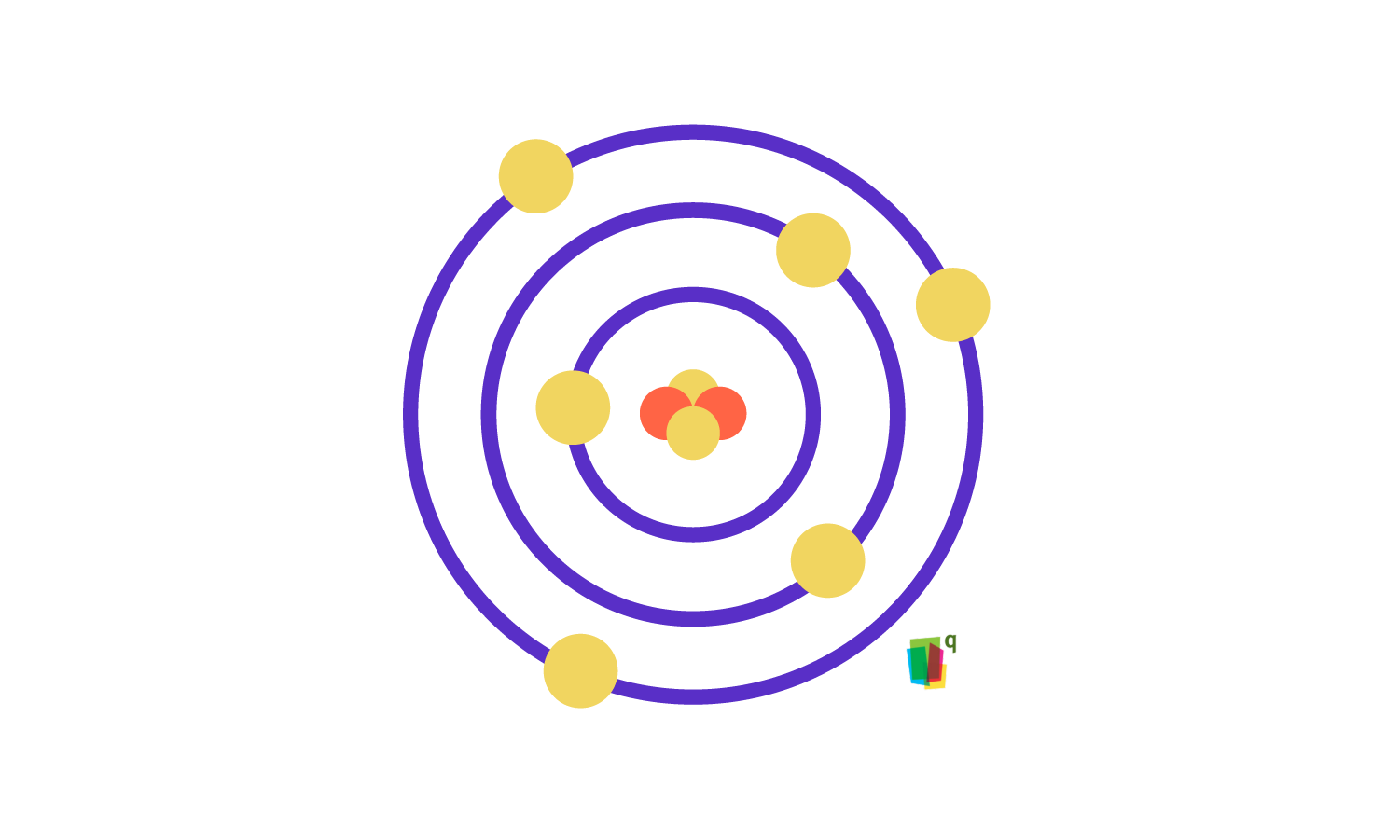
Danish physicist Niels Bohr won the 1922 Nobel Prize in Physics for his work on atomic structure. He proposed that electrons orbit the nucleus in fixed paths or “energy levels.” This simple but powerful idea became a key part of quantum mechanics and helped explain why atoms behave the way they do.
Notable contributions
- Bohr model of the atom — Showed that electrons orbit in fixed energy levels, invisible but predictable.
- The foundation of quantum mechanics — Explained the behavior of atoms and tiny particles.
Complementarity principle — Introduced the idea that particles can behave in multiple ways depending on how we observe them.
Vera Rubin — Dark Matter’s Hidden Hand
American astronomer Vera Rubin provided some of the first solid evidence for dark matter. By studying how stars rotate within galaxies, she discovered that visible matter wasn’t enough to explain their motion and that something invisible must be holding them together. Her work fundamentally changed our understanding of the cosmos.
Notable contributions
- Proved that dark matter exists — Her measurements showed that galaxies contain far more mass than we can see.
- Changed our understanding of the universe — Showed that most of the universe is made of something we cannot see.
- Advocated for women in science — Opened doors for future generations of female scientists.
Hans Bethe — How Stars Shine

German-American physicist Hans Bethe won the 1967 Nobel Prize in Physics for his contributions to the theory of nuclear reactions, especially his discoveries concerning the energy production in stars. He discovered that fuse atoms together inside stars, processes we cannot see directly, but that create light, heat, and even the elements of life.
Notable contributions
- Explained how stars shine — Discovered that nuclear fusion powers the Sun and other stars.
- Stellar nucleosynthesis theory — Showed how stars create the elements that make up planets and life.
- Advanced nuclear physics — His research influenced energy and astrophysics studies.
Subrahmanyan Chandrasekhar — The Life of Stars

Source: Little Passports by BEGiN
Indian-American astrophysicist Subrahmanyan Chandrasekhar won the 1983 Nobel Prize in Physics for his work on stellar structure and evolution. Subrahmanyan Chandrasekhar helped us understand what happens to stars after they run out of fuel. He discovered that stars don’t all die the same way, and their final fate depends on how massive they are. Chandrasekhar showed that small stars shrink into white dwarfs, while heavier stars collapse under their own gravity and become neutron stars or black holes. This idea, now known as the Chandrasekhar limit, revealed the hidden processes that shape the life cycle of stars.
Notable contributions
- Chandrasekhar limit — Predicted that massive stars collapse into black holes instead of becoming white dwarfs.
- Modeled star life cycles — Showed how stars are born, live, and die, even when we cannot see them.
- Predicted black holes and neutron stars — Helped scientists know where to look for these invisible objects.
LIGO Scientists — Listening to the Cosmos
Kip Thorne, Rainer Weiss, and Barry Barish (USA) were awarded the 2017 Nobel Prize in Physics for detecting gravitational waves. These ripples in spacetime, caused by colliding black holes, had been predicted by Einstein a century earlier. LIGO (Laser Interferometer Gravitational-Wave Observatory) allowed us to “hear” the universe for the first time.
Notable contributions
- Detected gravitational waves — Measured ripples in spacetime from colliding black holes.
- Confirmed Einstein’s prediction — Proved a century-old theory about the universe.
- Opened a new field of astronomy — Allowed us to “hear” cosmic events, not just see them.
Cecilia Payne-Gaposchkin — The Stars’ Hidden Chemistry
British-American astronomer Cecilia Payne-Gaposchkin discovered that stars are made mostly of hydrogen and helium, overturning previous assumptions that stars had a similar composition to Earth. Though she did not win a Nobel Prize, her work revealed the invisible elemental structure of the universe and how stars generate energy.
Notable contributions
- Showed stars are mostly hydrogen and helium — Overturned the idea that stars have Earth-like composition.
- Explained how stars generate energy — Helped us understand stellar lifecycles.
- Mentored future astronomers — Trained generations who advanced astrophysics.
Edwin Hubble — Expanding the Universe
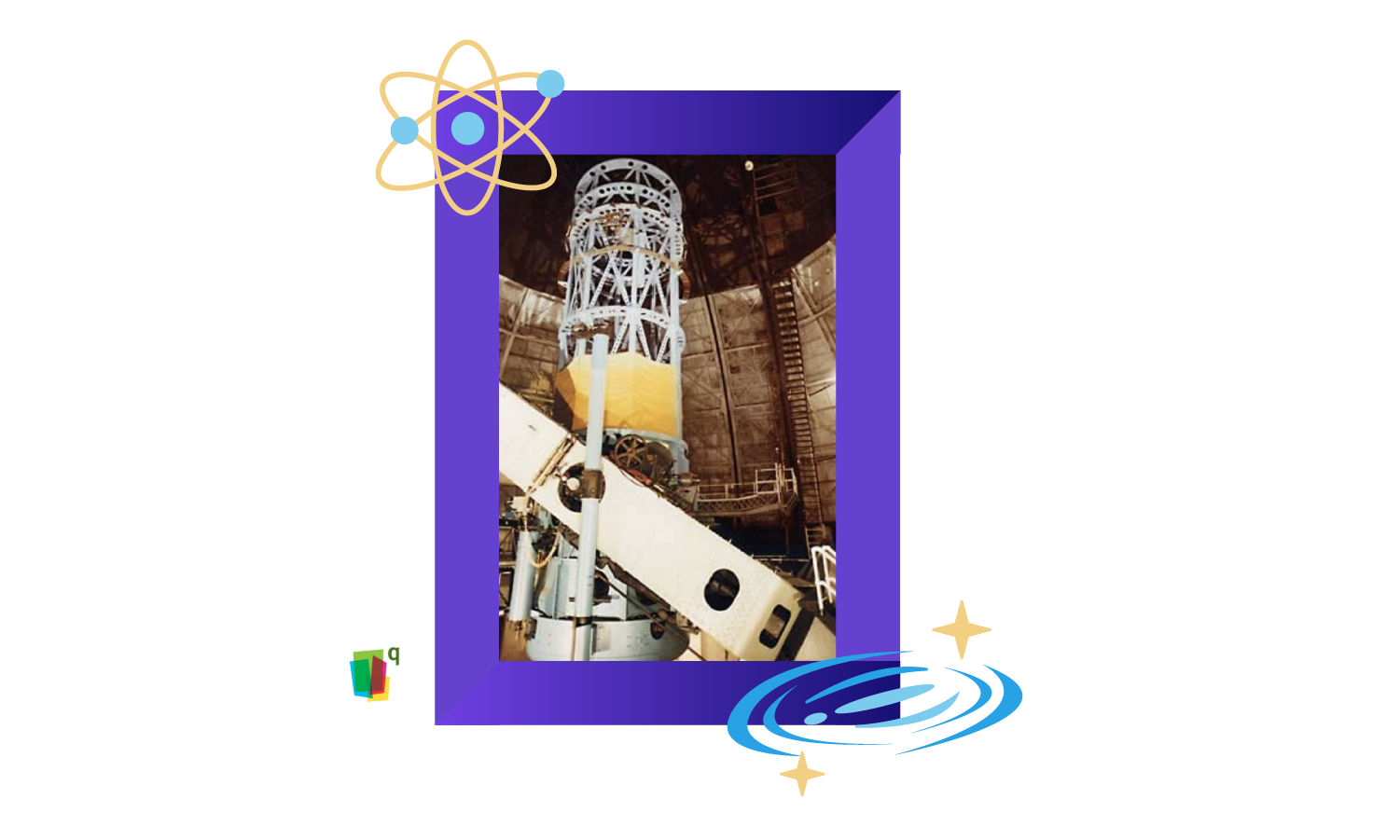
American astronomer Edwin Hubble looked through the world’s most powerful telescope at the time (100-inch Hooker reflector telescope) and discovered that many of the faint “clouds” in the sky were actually galaxies far beyond the Milky Way. He also found that these galaxies are moving away from us, meaning the universe is expanding. Though not a Nobel laureate, his work made invisible cosmic structures observable, laying the foundation for modern cosmology.
Notable contributions
- Discovered galaxies beyond the Milky Way — Showed the universe is much bigger than we thought.
- Found that the universe is expanding — Laid the foundation for the Big Bang theory.
- Classified galaxies — Created a system that helps astronomers study the cosmos.
Into the Invisible
The universe doesn’t exactly come with instructions. Most of it is hidden, quiet, too tiny, or too far for our eyes to catch. Luckily, these pioneers in Physics and Astrology had the curiosity and the brainpower to figure it out. Because of them, we now understand atoms, stars, black holes, and even the shape of spacetime, transforming our understanding of reality.
Today, their legacy continues, and scientists are still chasing the invisible, trying to reveal what’s hidden from view. The good news is that we’re getting better at it every day. And until we find it all, we get to enjoy the best part of science: there’s always more to discover.
