

Welcome back to our ongoing series, “Nobel Ideas“. We explore the lives and work of remarkable individuals nominated for the Nobel Prize but who did not win.
This week, we delve into the realm of genetics, featuring the groundbreaking contributions of Rosalind Franklin. An English chemist and X-ray crystallographer whose work played a crucial role in discovering the DNA double helix structure.
Rosalind Franklin and Her Work
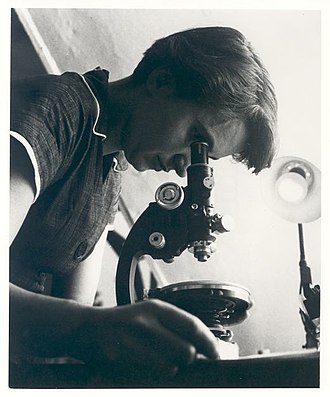
Rosalind Franklin, born in 1920 in Notting Hill, London, was a brilliant chemist and X-ray crystallographer. At 15, she knew she wanted to become a scientist. Despite a challenging and short life, Franklin’s passion for science led her to groundbreaking discoveries in genetics. Her work significantly advanced our understanding of the molecular structures of complex substances. Her pivotal contribution to science lies in her research on the structure of DNA.
Using X-ray crystallography, a technique she mastered, Franklin obtained high-quality images of DNA fibers, most notably the iconic “Photo 51.” This now-famous photograph revealed the distinctive “X” pattern, suggesting a helical structure within the DNA molecule. Franklin’s meticulous and precise experimental work provided crucial data that were instrumental in deciphering the three-dimensional structure of DNA.
The Significance of Her Contribution
Her contribution went beyond DNA. Franklin’s X-ray crystallography work also played a key role in uncovering the structures of RNA, viruses, coal, and graphite. Her ability to produce detailed and accurate images of molecular structures helped advance various fields within chemistry and biology.

However, the circumstances surrounding the discovery of the DNA double helix have often overshadowed Franklin’s legacy. At the time, while working at King’s College London, Franklin’s colleagues showed her photographs without her knowledge to James Watson and Francis Crick, who were building their model of the DNA structure. Watson and Crick ultimately published their model in 1953, without giving Franklin proper credit for her contribution.
Despite the challenges she faced during her career, including the lack of acknowledgment for her critical role in the DNA discovery, Franklin’s pioneering work continues to be recognized as foundational in the field of molecular biology. Her legacy serves as a testament to the importance of perseverance, precision, and the often collaborative nature of scientific progress.
The Nobel Prize Nomination
Despite Rosalind Franklin’s crucial contributions to the understanding of DNA’s structure, she did not receive the Nobel Prize during her lifetime. This was due to the Nobel Committee’s policy of not awarding posthumous prizes. Franklin’s untimely death in 1958 at the age of 37 meant that she was not officially recognized. James Watson, Francis Crick, and Maurice Wilkins, were recognized and awarded the Nobel Prize in Physiology or Medicine in 1962.
The Nobel Committee’s decision not to include Franklin in the award has been a subject of historical scrutiny and debate to this day. While the scientific community acknowledged the work of Watson, Crick, and Wilkins, they only partially acknowledged Franklin’s critical role in providing key experimental data through X-ray crystallography at that time.

The omission of Franklin from the Nobel Prize remains a complex historical issue. It highlights the challenges and biases faced by women scientists in the mid-20th century. Franklin’s story has since sparked discussions about gender equity in science and the importance of recognizing the contributions of all researchers, regardless of their gender.
The subsequent acknowledgment of Franklin’s contributions to scientific literature and discussions surrounding the DNA discovery has brought her legacy to the forefront, emphasizing the need for equitable recognition in the field of science. Though the Nobel Prize eluded her, the scientific community now widely acknowledges Rosalind Franklin’s enduring impact on molecular biology and her pivotal role in revealing the intricacies of the DNA molecule.
Her legacy serves as a reminder of the ongoing efforts to rectify historical oversights and ensure that the scientific contributions of all individuals are appropriately acknowledged and celebrated.
Rosalind Franklin Impact and Legacy
Despite not receiving a Nobel Prize, Rosalind Franklin’s legacy endures. The fields of molecular biology and genetics continue to celebrate her contributions to the understanding of DNA structure and her pioneering work in X-ray crystallography. Franklin’s story also sparked discussions about the importance of recognizing the contributions of women in science and the need to address historical gender biases.

Rosalind Franklin Had A Nobel Idea
As we reflect on Rosalind Franklin’s journey, we are reminded that the pursuit of knowledge is a collective endeavor. Scientific breakthroughs, though often attributed to individuals, are built upon the collective efforts of diverse minds. Franklin’s legacy serves as a call to continually reassess and refine our understanding of scientific history, ensuring that it is inclusive, equitable, and reflective of the multifaceted nature of discovery.
Join us next week as we continue our exploration of “Nobel Ideas”. We shed light on individuals whose impactful contributions may not have been heralded by the Nobel Prize but have nonetheless shaped the landscape of human knowledge.

[…] Rosalind Franklin’s pioneering work with X-ray crystallography was pivotal in uncovering the structure of DNA. Her “Photo 51” provided critical evidence that helped James Watson and Francis Crick model the double-helix structure. However, her contributions were largely unacknowledged during her lifetime, as Watson and Crick were awarded the 1962 Nobel Prize in Physiology or Medicine without her. […]