
What if scientists could use light to switch specific brain cells on and off? It might sound like something from a science fiction movie, but it is a real technique that has transformed how researchers study the brain.
The 2026 Nobel Prize in Physiology or Medicine went to three scientists for discoveries that helped make this possible. Their work laid the foundation for a technique called optogenetics, which allows researchers to control the activity of selected nerve cells using light.
But how does shining light on a cell change what it does? And why is this discovery such a big deal for science?
For this year’s Nobel Ideas series, let’s explore the fascinating research behind this Nobel Prize, from tiny algae to the mysteries of the human brain.
- Meet the Scientists Behind the Discovery
- What Exactly Is Optogenetics?
- Why Is Controlling Brain Cells Such a Big Deal?
- From Tiny Algae to the Human Brain
- Could Optogenetics Help Treat Diseases?
- What Can Students Learn From This Nobel Prize?
- Test Your Knowledge: How Much Did You Learn?
- The Takeaway: Sometimes, Big Discoveries Begin With Small Questions
Meet the Scientists Behind the Discovery

The 2026 Nobel Prize in Physiology or Medicine was awarded to Peter Hegemann, Georg Nagel, and Karl Deisseroth for their discoveries concerning light-gated ion channels and optogenetics.
Although their work focused on different parts of the problem, their contributions helped scientists develop a new way to investigate how the brain works.
Peter Hegemann: Where the Discovery Began
Peter Hegemann, a German scientist and professor at Humboldt University of Berlin, was interested in a simple question: how does a single-celled alga “see” light?
Certain green algae swim towards or away from light, helping them find conditions that are suitable for photosynthesis. Hegemann studied how these tiny organisms detect light and translate it into movement.
In 1991, Hegemann’s research revealed something unexpected: when the algae were exposed to light, electrically charged particles called ions flowed into the cells almost instantly. This response was much faster than the light-detection process in animal eyes, where rhodopsins rely on a chain of molecular messengers to transmit signals.
The speed of the response suggested that there might not be enough time for a separate chain of molecular messengers to carry the signal. Instead, Hegemann began to suspect that the protein responsible for detecting light might also be the one allowing ions to flow into the cell.
It might seem like an unusual starting point for brain research. But it raised an important question: could a single protein both detect light and control the flow of ions into a cell?
Georg Nagel: Discovering a Light-Sensitive Protein
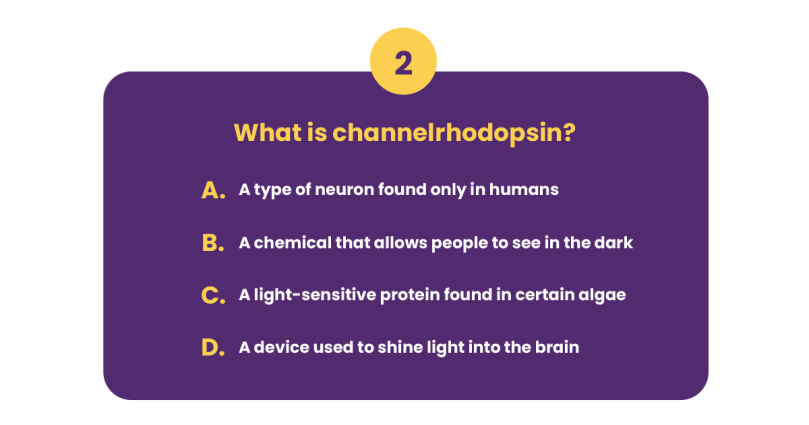
Working with Hegemann, fellow German scientist and professor at the University of Würzburg Georg Nagel helped investigate a remarkable protein called channelrhodopsin in the early 2000s, found in certain algae.
The protein has an unusual property: when exposed to blue light, it opens a channel in the cell membrane, allowing electrically charged particles called ions to pass through.
This movement of ions can change the electrical activity of a cell.
The researchers discovered that this light-sensitive mechanism could also function in other types of cells. Nagel’s work was particularly important in demonstrating how channelrhodopsin could be used beyond algae, making it possible to apply the protein to neuroscience research.
This finding would become crucial to the development of optogenetics.
Karl Deisseroth: Bringing Light Into Neuroscience
American scientist and professor at Stanford University Karl Deisseroth recognised the potential of using channelrhodopsin to investigate the brain.
Neurons, or nerve cells, communicate through electrical and chemical signals. If researchers could make selected neurons respond to light, they could potentially control their activity and investigate how they contribute to particular brain functions.
Deisseroth and his colleagues at Stanford, working with Georg Nagel and others, introduced the gene responsible for producing channelrhodopsin into neurons grown in the lab. When the appropriate light was applied, the light-sensitive proteins allowed the researchers to trigger electrical activity in those cells.
Deisseroth’s team then worked on using the technique in living animals. By 2007, researchers had demonstrated that it could be used to control neurons in the brains of living mice.
Together, these discoveries established the foundation for optogenetics, giving scientists a powerful new tool for studying the brain.
What Exactly Is Optogenetics?
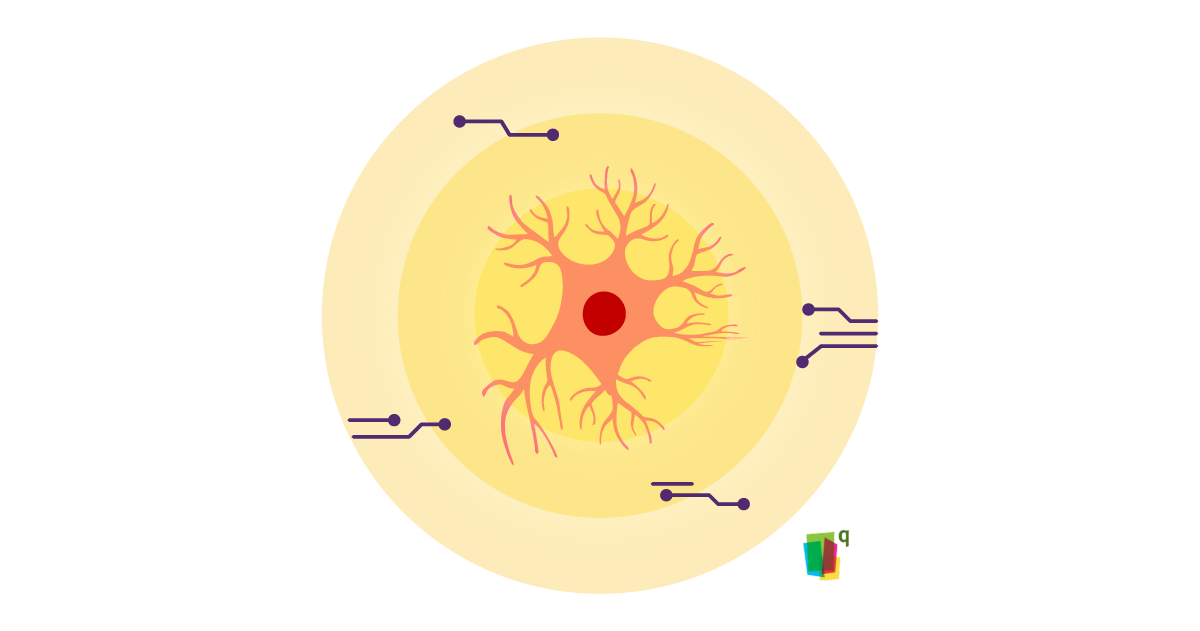
Let’s break down the name.
The word optogenetics combines two ideas:
- Opto relates to light.
- Genetics relates to genes and genetic material.
Put them together, and you get a technique that uses genetic methods and light to control the activity of selected cells.
Here’s how it works.
Scientists first introduce genetic instructions that allow particular cells to produce light-sensitive proteins, such as channelrhodopsin. These proteins become part of the cell membrane.
When researchers shine the appropriate light on the cells, the proteins respond. In the case of channelrhodopsin, blue light opens channels that allow ions to flow across the membrane, helping trigger electrical signals in neurons.
This gives researchers a way to influence the activity of selected nerve cells and observe what happens next.
Think of It as a Tiny Light Switch
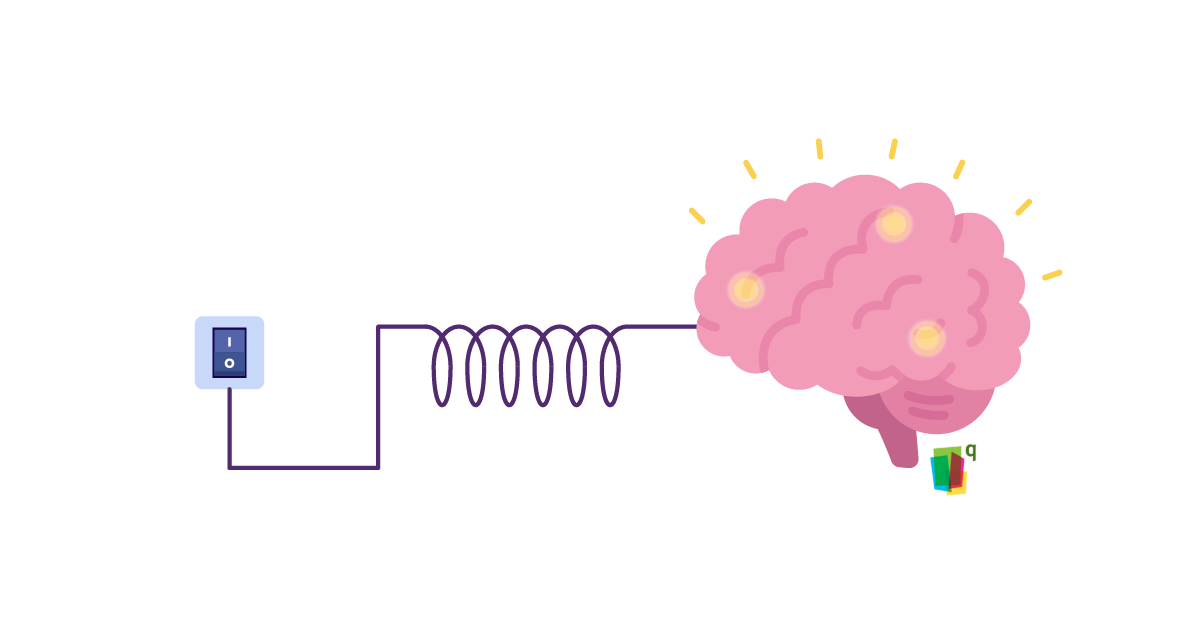
Imagine a neuron as a tiny electrical device.
Normally, scientists cannot simply shine a flashlight at a particular neuron and expect to switch it on or off.
With optogenetics, however, researchers can make selected neurons sensitive to specific wavelengths of light. They can then use carefully controlled light to influence the cells’ activity.
Depending on the light-sensitive proteins and methods used, researchers can activate or inhibit particular cells.
It’s a little like having a switch that allows scientists to investigate what happens when a specific part of a complicated electrical circuit is activated.
There is one important difference, though: neurons are living cells, not electronic components. Their activity is part of a complex biological system, and understanding their role requires carefully designed experiments.
And no, this doesn’t mean ordinary light can control your brain! Optogenetics requires specialised genetic and experimental techniques to make selected cells respond to light.
Why Is Controlling Brain Cells Such a Big Deal?
To understand why optogenetics is so important, we first need to understand a challenge that neuroscientists have faced for decades.
The human brain contains billions of neurons. These cells communicate with one another through intricate networks, helping us move, learn, remember, experience emotions, and respond to our surroundings.
Scientists can observe brain activity and identify neurons that become active during particular experiences. But there is a difference between observing that a cell is active and proving that its activity contributes to a particular function.
Imagine researchers discover that a group of neurons becomes active when an animal feels thirsty.
Does that mean those neurons cause thirst?
Not necessarily. The cells might contribute to thirst, respond to another process happening in the brain, or be involved in several functions at once.
Simply observing the activity does not tell researchers the whole story.
Optogenetics provides a way to investigate cause and effect. By selectively changing the activity of particular neurons, scientists can observe whether and how the animal’s behaviour changes.
This helps researchers investigate questions such as:
- Which neural circuits contribute to learning and memory?
- How does the brain process fear and other emotions?
- Which neurons influence hunger, thirst, or movement?
- How do particular brain circuits contribute to behaviour?
- What changes in these circuits might be involved in neurological or psychiatric conditions?
Optogenetics does not answer every question about the brain, but it gives researchers a powerful way to investigate how specific cells contribute to its functions.
From Tiny Algae to the Human Brain
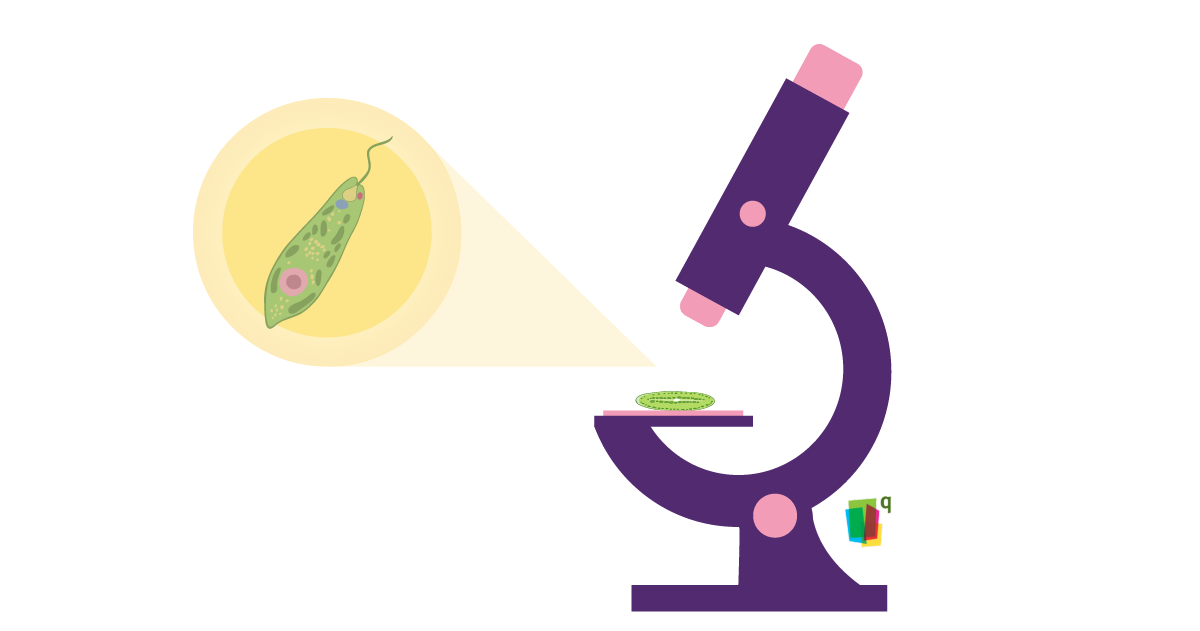
One of the most fascinating aspects of this Nobel Prize is where the story began.
The research that helped make optogenetics possible did not start with scientists trying to control the human brain. It began with questions about how single-celled algae respond to light.
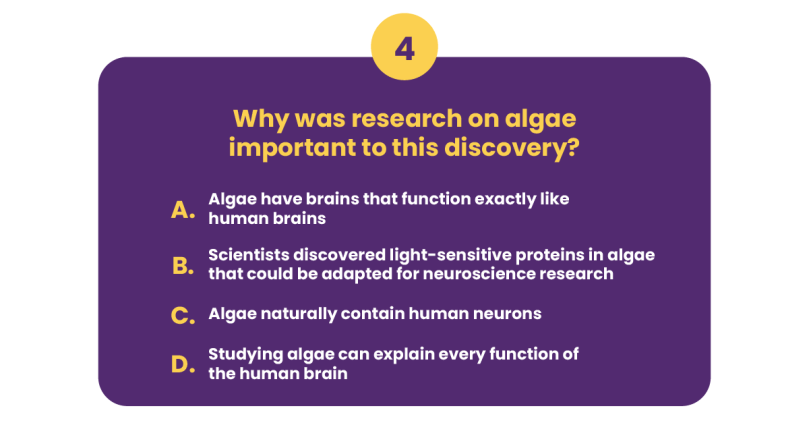
Certain algae can detect light and use it to help guide their movement. By investigating this ability, scientists discovered proteins with properties that could eventually be adapted for neuroscience research.
Researchers then applied this knowledge to neurons, creating a technique that allows them to study the brain in ways that were previously difficult or impossible.
Think about that for a moment.
A discovery involving a microscopic organism helped researchers develop a tool for investigating one of the most complex organs in the human body.
It is a wonderful example of how scientific research can take unexpected directions. A question that seems small or specialised at first can eventually lead to discoveries with far-reaching applications.
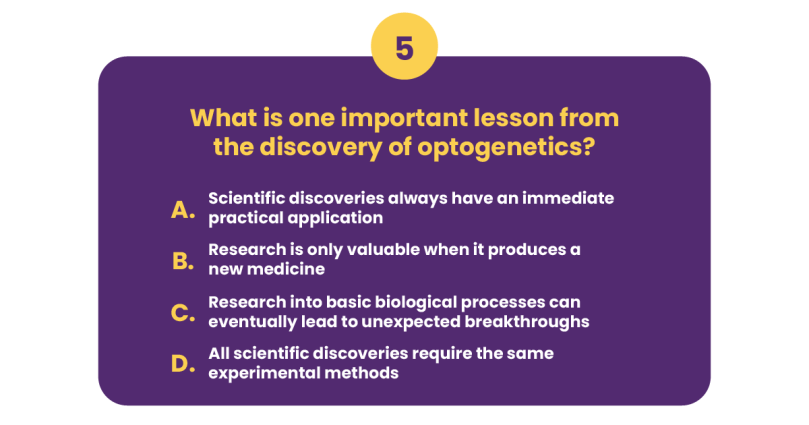
It also reminds us why basic scientific research matters. Scientists do not always know how a discovery will be used when they first begin investigating a problem.
Sometimes, the value of a discovery becomes clear only years later, when another researcher finds a way to build on it.
Could Optogenetics Help Treat Diseases?

Understanding how the brain works is not just an interesting scientific challenge. It could also help researchers develop better ways to investigate and eventually treat certain medical conditions.
Optogenetics has helped scientists study neural circuits involved in processes such as movement, memory, emotions, and behaviour. These findings can improve our understanding of neurological and psychiatric conditions.
Researchers are also investigating potential medical applications of optogenetic techniques, including approaches that could help restore some visual function in people with severe vision loss.
However, it is important to distinguish between a research technique and an established medical treatment.
Optogenetics is widely used in neuroscience research, but many potential clinical applications are still being investigated. It is not a routine treatment for conditions such as Alzheimer’s disease, Parkinson’s disease, or depression.
Developing a new treatment requires much more than identifying a promising scientific technique. Researchers must establish whether it is safe, effective, and suitable for the people who might benefit from it.
Nevertheless, optogenetics has opened new possibilities for understanding the brain and investigating potential future treatments.
And that is part of what makes this discovery so exciting: it gives scientists new ways to ask questions that could eventually lead to important medical advances.
What Can Students Learn From This Nobel Prize?

Beyond the fascinating science itself, the work recognised by this year’s Nobel Prize offers several important lessons for students.
1. Science Often Combines Different Subjects
Optogenetics brings together biology, genetics, physics, and neuroscience.
Understanding how light-sensitive proteins work requires knowledge of biology and chemistry. Understanding how they influence electrical activity involves the physical properties of ions and cell membranes. Applying the discovery to the brain requires an understanding of neuroscience.
This shows how different scientific disciplines can work together to solve complex problems.
You might study these subjects separately in school, but scientific discoveries often happen where they overlap.
2. Small Discoveries Can Lead to Big Breakthroughs
The discovery of light-sensitive proteins in algae eventually helped researchers develop a technique for studying neurons.
At the beginning of a research project, scientists might not know whether their findings will have a practical application.
That does not make the research unimportant.
By building a deeper understanding of how the natural world works, scientists create opportunities for future discoveries.
3. Asking Questions Is an Essential Part of Science

The research behind optogenetics began with curiosity about how a tiny organism responds to light.
That curiosity led to experiments, new findings, and an entirely new way to investigate the brain.
Science is not just about memorising facts or learning established theories. It also involves asking questions, testing possible explanations, examining evidence, and changing our understanding when new evidence emerges.
Sometimes, asking a seemingly simple question can lead to an extraordinary discovery.
4. Observing Something Is Not the Same as Proving What Causes It
One of the most important scientific lessons from optogenetics is the difference between correlation and causation.
Suppose you notice that students who eat breakfast tend to perform better on a particular test.
Does that automatically mean breakfast caused the better results?
Not necessarily. Other factors might also influence performance.
Similarly, observing that certain neurons become active during a behaviour does not automatically prove that those neurons cause the behaviour.
By manipulating the activity of selected neurons and observing the results, researchers can investigate possible causal relationships more directly.
This principle is useful across many scientific fields, from biology and psychology to environmental science.
Test Your Knowledge: How Much Did You Learn?
Now that you’ve explored the science behind the 2026 Nobel Prize in Physiology or Medicine, let’s see what you remember!



How did you do? If you got a few wrong, don’t worry. The important thing is understanding why the answers are correct and being curious enough to explore the topic further.
The Takeaway: Sometimes, Big Discoveries Begin With Small Questions
The 2026 Nobel Prize in Physiology or Medicine recognises discoveries that helped scientists investigate the brain in an entirely new way.
Peter Hegemann and Georg Nagel discovered the remarkable properties of light-sensitive proteins in algae, while Karl Deisseroth helped transform that discovery into a technique for controlling the activity of neurons with light.
Their work established the foundation for optogenetics, giving researchers a powerful new tool for investigating how specific nerve cells contribute to memories, emotions, and behaviour.
But perhaps the most inspiring part of the story is how it began.
The path to understanding the human brain started, in part, with a question about how a tiny organism responds to light.
It is a reminder that science advances not only through attempts to solve major problems, but also through curiosity, careful experimentation, and a willingness to explore questions whose answers are not yet known.
And who knows? The next major scientific breakthrough might begin with a question asked by a student sitting in a classroom today.

