A Guide to Maximizing Virtual Learning and Student Engagement with Breakout Rooms

Virtual learning is popular because it is cost-effective and convenient. However, this learning arrangement can disengage students, especially during long sessions. 

When learners lose interest, they lack motivation, are unable to retain information, and perform poorly. This makes your job as an instructor much harder.  

One solution to this problem is deploying breakout rooms. These virtual spaces facilitate group interactions and active participation during lessons. In this guide, we will tell you everything you need to know about using these subspaces to keep learners engaged. 

Read More »
10 Ways to Simplify Financial Reporting in Educational Settings

Educational institutions already have plenty of administrative tasks, so financial reporting can seem like a chore. However dealing with income statements, balance sheets, and cash flow statements is essential for any organization with big financial decisions to make.

The key is to keep things simple. If your data collection processes are chaotic and your reports are confusing, you won’t have a clear picture of your financial health—which could mean gaps in funding for educational programs.

In this post, we’ll explain the importance of simple financial reporting in an educational setting and offer 10 top tips for making it happen.

Read More »

Now That’s a Nobel Idea: Celebrating the 2024 Nobel Prize Winners

Celebrating the 2024 Nobel Prize Winners

Every year, the Nobel Prizes honor remarkable achievements across diverse fields. Each one deepening our understanding of the world and inspiring progress. With a legacy spanning over a century, these awards represent the enduring power of human curiosity, dedication, and resilience. At QuickSchools, we celebrate this impact, sharing stories that spark curiosity and encourage new generations to explore, discover, and innovate. Let’s dive into the Nobel Prize categories before we take a look at the 2024 Nobel Prize Winners

Read More »

How to Align Financial Planning Strategies With Educational Objectives

Financial planning is important for any organization. But for educational institutions—which often have to provide their services on a limited budget—it’s vital to make a financial plan that will be sustainable both now and in the future.

We’re not just talking about having enough money in the pot for basic service provision. We’re talking about using that money to shape the best possible outcomes for students (and educators). And that means aligning your financial plans closely with your educational objectives.

In this post, we’ll discuss the importance of financial planning and analysis and help you to make data-driven financial decisions that align with available resources and meet the needs of those you serve.

Read More »

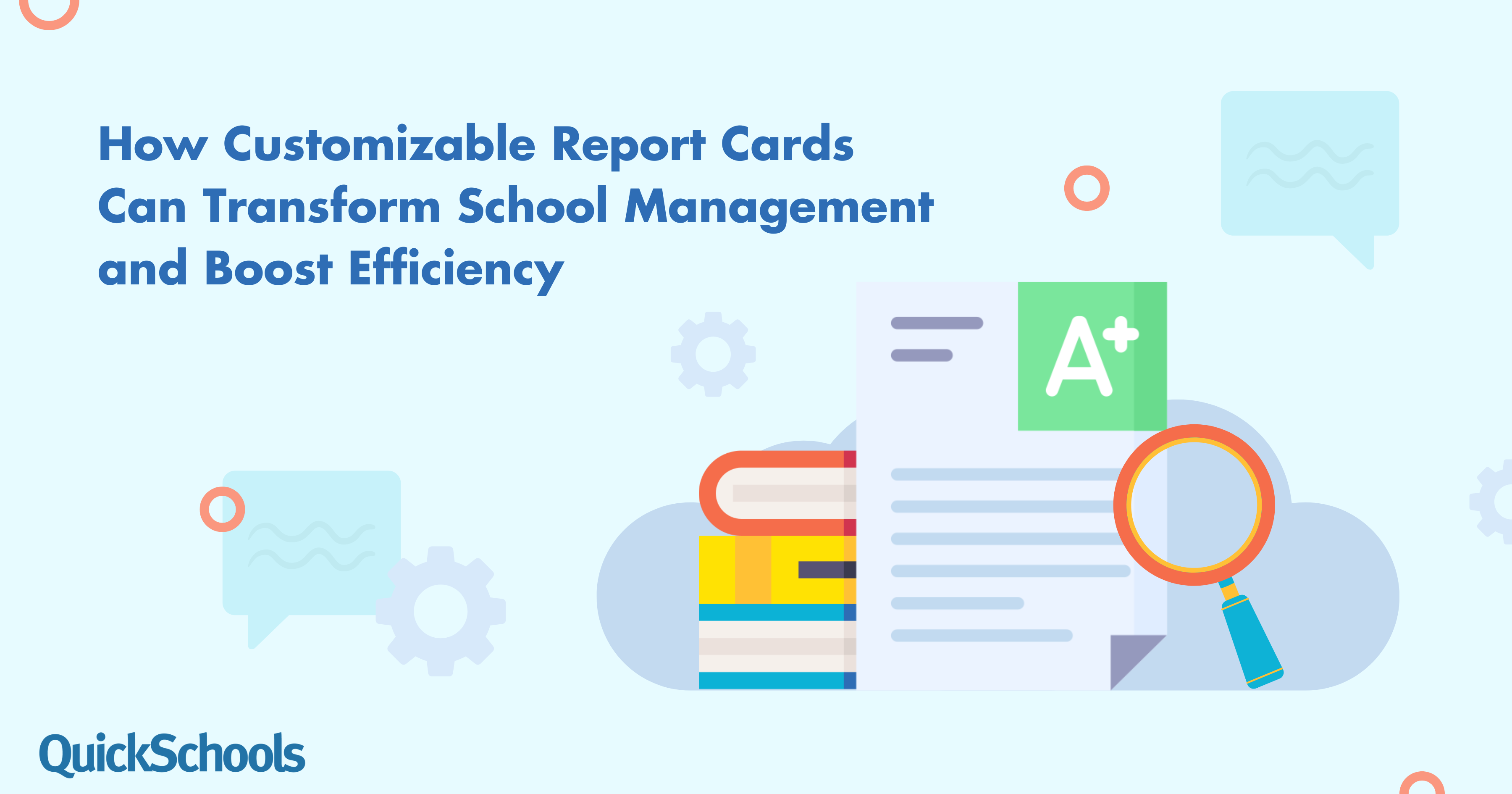
How Customizable Report Cards Can Transform School Management and Boost Efficiency

How Customizable Report Cards Can Transform School Management

Report cards are a crucial component of school management, serving as a bridge between teachers, administrators, parents, and students. They provide a comprehensive view of student performance, behavior, and progress. However, traditional methods of report card generation can be time-consuming and inefficient, often creating frustration for both teachers and administrators. With the right tools, schools can transform this process into one that is fast, flexible, and customized to meet their unique needs. Modern Student Information Systems (SIS), like QuickSchools, enable educators to streamline report card generation, making it easier and more effective. By utilizing customizable templates, schools enhance their reporting process to fit specific goals, improving communication and overall management.

Read More »

5 Strategies for Organizing Your Lessons to Maximize Student Success

5 Strategies for organizing your lessons

Effective lesson organization isn’t just about making your day smoother, it is about enhancing student outcomes. To achieve this, it’s essential to carefully consider what students need to learn and how to create experiences that best enable them to reach those goals. It is about prioritizing students by considering how each learning activity will impact them and how these experiences will achieve the intended learning outcomes. Yet, many teachers—especially those just starting—struggle with the daunting task of lesson planning. Balancing the needs of diverse learners, meeting curriculum standards, and managing time effectively can feel overwhelming. However, lesson organization can become your strongest ally with the right strategies. We hope this guide will help provide you with actionable tips for organizing your lessons and set you up for success in your teaching career.

Read More »

AI in Education: Benefits, Challenges, and Best Practices

AI is a massive game changer in the field of technology but the best aspect of AI is that it makes some of the most complex creative and administrative tasks accessible to anyone. 

If you don’t know how to structure a sentence to sound more professional, you can just ask the AI to do it for you. If you hate having to write an entire paper in MLA style, you can just write the way you want and list a few sources, and, at the very end, just ask the tool to format it for you. 

AI also changes the way you do research. More and more people are just going straight to the ChatGPT for answers instead of using Google. The thing is that this type of AI is so great at summarizing, making lists, and more.

Now, if you’ve been paying attention so far, you must have noticed that all of these tasks have one thing in common – they’re so easily adaptable for academic purposes. 

So, how exactly is AI impacting modern education? What are the benefits, the challenges, and some of the best practices? Let’s find out!

Read More »