Cloud-based and on-premises student information systems (SIS) both serve the same purpose. They ensure smooth operations for your school by managing, tracking, and creating reports from student data and other school information to maintain efficiency. The main difference is how and where these systems are hosted and how well they work for your specific needs.
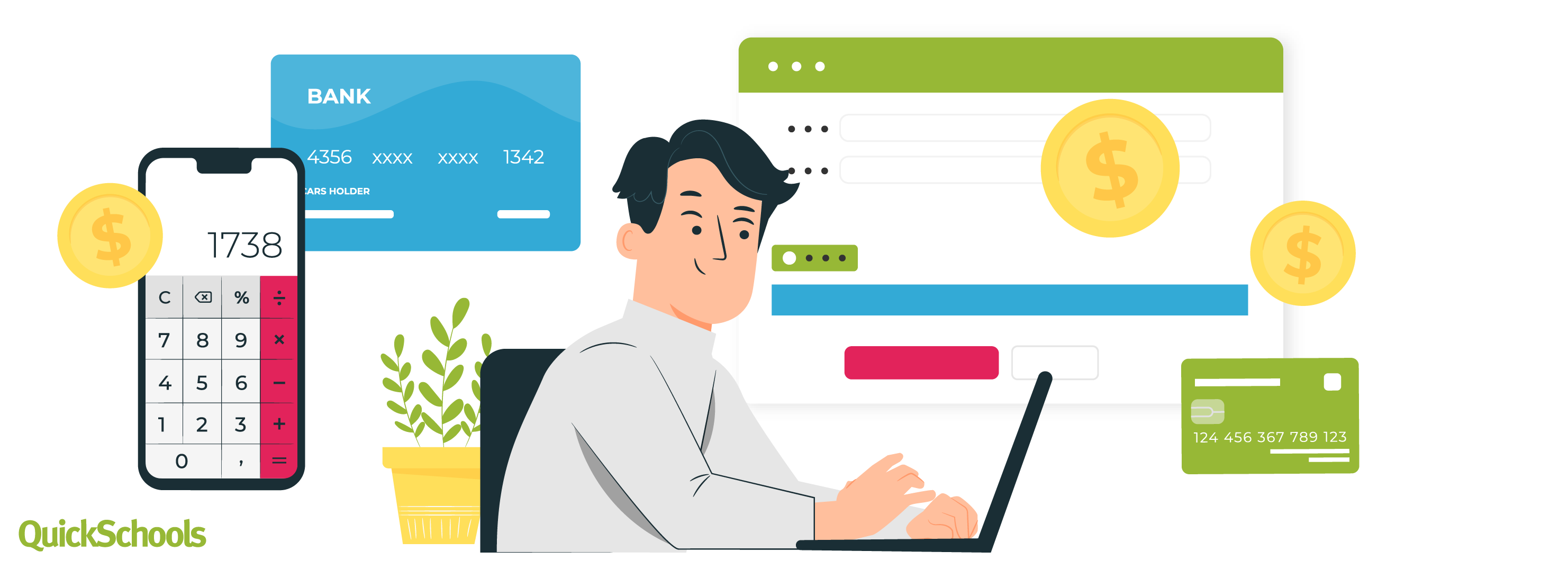
Do you have a hard time managing your school fee payments? The amount of time and energy spent in organizing and collecting school tuition is not an easy task, though it may seem simple and straightforward. We understand the frustration. Fee management is definitely complicated and challenging.
QuickSchools always aims to offer a user-friendly, robust, and effective student information system. Not only for school administrators and faculty members but also for students and their parents. We know how vital it is for schools to keep their accounts updated in order to maintain productivity. It helps to provide the best for their students. With QuickSchools, you can now reduce payment delays and improve cash flow as well as boost organization efforts. Trying to keep track of various fee structures, different payment plans, and scholarships offered to students, as well as the dissimilar discounts on fees can be truly overwhelming. Especially without proper assistance.
All children need love and attention. For kids with learning disabilities, positive reinforcement such as words of encouragement and support can help them feel a strong sense of self-worth and have the determination to keep going even when things get tough. Learning disabilities emotionally affect the child and produces a ripple effect on family, friends, teachers, and peers at school. Children with learning disabilities often absorb what others unthinkingly say about them, even when it was not said to them. They are most likely to believe themselves to be “behind” or “different.” It is always important to speak kindly, and hopefully, with these tips, we can help them build self-confidence and find success at school, and in life.
As human beings, we tend to give more importance to negative experiences than to positive or neutral experiences. You are not alone, it’s our nature to fixate on bad news, a phenomenon known to psychologists as negativity bias. Sometimes we can’t help but focus on the negative even when they are insignificant compared to other positive instances.
Schools have been under enormous pressure to ensure that education for the students had as little disruption as possible when the Covid-19 outbreak began. Now that schools have been operating normally again, it is more important now than ever for school leaders to ensure the welfare of their students.
There’s a big debate among educators: Which is better for teachers, Google Meet or Google Classroom? Both tools rank as top choices for online teaching, but each serves a different purpose. In this article, we’ll explore whether one stands out as the better choice for teachers, and how each tool supports virtual classrooms in unique ways.
When it comes to online learning, Google has stepped up to help. Teachers have been able to use Google tools to make sure that the education for their students wasn’t disruptive. This was especially useful during the COVID-19 outbreak and lockdowns imposed. Google Meet and Google Classroom were helping classes to continue online. With online learning now growing even with no more lockdowns, these tools will still be beneficial in the education industry. The question is, however, what are the differences between Google Meet and Google Classroom? Both resources are different from each other and they both have their own pros and cons.
When the new school year starts after this summer break, young educators will be entering school to begin their new journey in the education world. While having to reel the trauma from being a teacher, especially during these trying times must be hard to process, it is only normal that new teachers may experience confusion and high levels of stress. Teachers bring creativity, channel high levels of energy, and bring light to the classroom.
We hope that these teaching tips might be of some help to all new teachers around the globe.
Creativity frees the mind in a way that enables a person to absorb knowledge more efficiently. It makes the learning process more efficient and enables alternative ways of thinking. Creative individuals are able to unblock old patterns or habits of thinking and are more likely to think out of the box.
Creativity is a difficult thinking skill to acquire while being the MOST desired. Possessing creativity gives you the ability to create something new, whether a new solution to a problem, a new method or device, or a new artistic object or form. Creativity serves us greater importance than we realize. We value creativity in our technology, entertainment, music, and in most if not all industries.
Summer is here! Thinking of ways to spend your summer break? (Pstt, other than binging Netflix and doom scrolling on social media of course). How about something different this time around. Let’s look at some options to make the best out of your summer break and maximize it to the fullest.