

Making organizational changes in schools can be challenging.
Education comes with high stakes, with parents and teachers invested in giving children the very best start in life. Education is important, and change can risk disrupting the fragile path of a student’s growth.
Change is also vital to progress. Education is continuously improving, with new ideas, discoveries, and methods always on the horizon. Giving children the best start in life includes preparing them for this ever-changing world.
So how do you enact meaningful change without creating negative outcomes?
Change management tackles these challenges head-on by creating a framework for change, increasing the chance of acceptance, adoption, and success.
In this article, we’ll discuss the importance of change in schools and how change management can facilitate positive transformation. We’ve also put together a practical guide for successfully implementing change management in your school.
How important is change for educational institutions?
Time changes everything – technology, scientific understanding, societal perspectives, what threatens us, our environment, job markets, skill demands, etc.
We could go on and on.
To ensure that every person’s education is preparing them for the brightest possible future, education needs to keep up with progress.
Educational change can mean anything from curriculum updates to implementing new technology across your organization. The goal of change is to improve the quality of and access to education, the working lives of staff, and the overall effectiveness of schools.
What kinds of changes should we consider?
Change can come with progress, to streamline operations, or at the behest of government regulation.
Common changes include:
- Curriculum updates that reflect new and changing information.
- Implementing remote and hybrid learning systems.
- Creating better communication between staff and parents.
- Increasing our understanding and accessibility for students with physical or learning disabilities.
- Implementing different teaching styles to create a more personalized approach to learning.
- Implementing or changing edutech systems, such as migrating from one school management program to another.
- Overhauling staff management to improve working conditions.
- Keeping up with changing regulations and laws.
What is change management?
Change management involves preparing, planning, and executing a change strategy that facilitates educational improvements.
Think of change management as a guide to help your school navigate the change process and increase its chances of success.
The benefits of creating a comprehensive change management strategy
Without a change management strategy, you risk losing track of your progress, failing to reach targets, and losing the trust of your stakeholders.
The benefits of implementing change management include:
- Having a clear action plan that everyone can work from.
- Better organization and streamlining.
- Creating a common goal for stakeholders.
- Better progress and target monitoring.
- Gathering and analyzing data to prove the value of change and encourage further improvements.
- Increased chance of successful change.
How to successfully implement change management in schools
Now that we’ve talked about the importance of change and change management, it’s time to talk about the practical steps.
To make things easier, we’re going to break down change management into three stages: preparation, planning, and execution.
Preparation stage

There are lots of famous quotes about preparation.
There’s Confucius, who said, “Success depends upon previous preparation, and without such preparation there is sure to be failure.”
Or how about Alexander Graham Bell, who claimed, “Before anything else, preparation is the key to success.”
What these great historical figures are helping us to emphasize is: Preparation is important.
Preparing your research, data, communication channels, and methods before you begin will help you organize your ideas and create a comprehensive change management plan based on evidence.
Decide what you want to change
The very first thing on your to-do list is figuring out what you want to change and why.
Look for weaknesses in your organization and come up with possible solutions. You can do this by looking at data like test scores and student engagement, getting staff together and having a brainstorming session, and assessing your own working day for roadblocks.
Let’s use an example.
The problem:
HR staff are wasting time sifting through hundreds of unqualified applicants. This affects the speed and quality of new hires, leading to poor learning outcomes.
The solution:
Implementing recruitment automation tools like an application portfolio management APM.
So now you know what you need: a plan that sells this solution to leadership, budgets for new tech, trains staff in these tools, and creates positive outcomes around hiring and learning outcomes.
Do some research
As educators, we understand the value of research. When preparing to enact change, cracking open the books is a great starting point. Or, to get with the times, opening your web browser, which sounds far less scholarly.
When putting together a change management strategy, you should consider:
- Looking into change management models – we’ll discuss this a little more in the section below.
- Reading studies and reports that support your push for change – for example, if you’re looking to improve teacher workloads, look into studies about mental health and work-life balance in educators.
- Finding evidence of positive outcomes – look for reports of other schools enacting similar changes and reaping the benefits.
- Looking at benchmarks – find out how your school compares to others across a variety of metrics, such as grades, graduations, diversity, employee retention, etc.
- Researching automation – a good project management platform can help you streamline your change management plan.
Research provides an evidence-based approach to your change management process.
You can pinpoint areas for improvement in your school, prove the value of your ideas to leadership, and create a change management model that works for you.
Consider change management models
Change management models are frameworks developed by leaders in change management.
Every school is unique, and your change management strategy will reflect that. Change management models can be a useful tool to help structure your process.
There are many change management models out there, so it’s important to look into each of them before you begin.
Understand reluctance to change
Stakeholder reluctance is one of the major barriers to change.
Schools suffer from this more than most organizations, since education can be such an emotionally-charged subject.
After all, parents want the best for their children, and teachers often have a strong emotional investment in the success of their students. Big changes can mean disruption, and nobody wants that throughout such an important time in a young person’s life.
Add overworked staff and the natural human instinct to distrust change and you have a cocktail for failure. Resistance can mean slow adoption of change, negative effects on your working environment, a lack of leadership support, and poor outcomes that will only create future reluctance to change.
But there are ways to prepare for this.
Before you begin, try to include stakeholders in your change management process. Ask teachers and parents what improvements they’d like to see in your school, keep the discussion open, and prepare evidence to prove the value of your ideas.
Planning stage

After preparation comes planning, so let’s get into it.
Set your targets
Defining your targets is vital to:
- Assessing where you’re currently at.
- Giving everyone a clear goal from the start.
- Keeping stakeholders engaged and accountable.
- Measuring progress throughout the course of change.
Targets will help you visualize the steps you need to take from where you are to where you want to be. These steps will make up your change management plan.
Create an impact assessment
A change impact assessment includes defining the effects change will have on various aspects of your organization:
- Staff – job roles, pay, responsibilities, training in new skills, and personal sentiment.
- Technology – you might need to upgrade hardware, change or implement software solutions, and train staff in usage.
- Leadership – change needs guidance, so leadership will be responsible for implementation, communication, budgeting, and outcomes.
- Students – will change bring disruption to students’ education? Does the potential for positive outcomes outweigh this?
- The school – potential positive and negative outcomes to your organization’s financial, reputational, and regulatory responsibilities through business capability modeling.
An impact statement gives you a realistic overview of cause and effect. From here, you can mitigate negative impacts.
Create a stakeholder communication plan
Communication is key to a successful change management strategy.
While not specific to schools, research by Oak Engage gives us some insights into the importance of change communication.
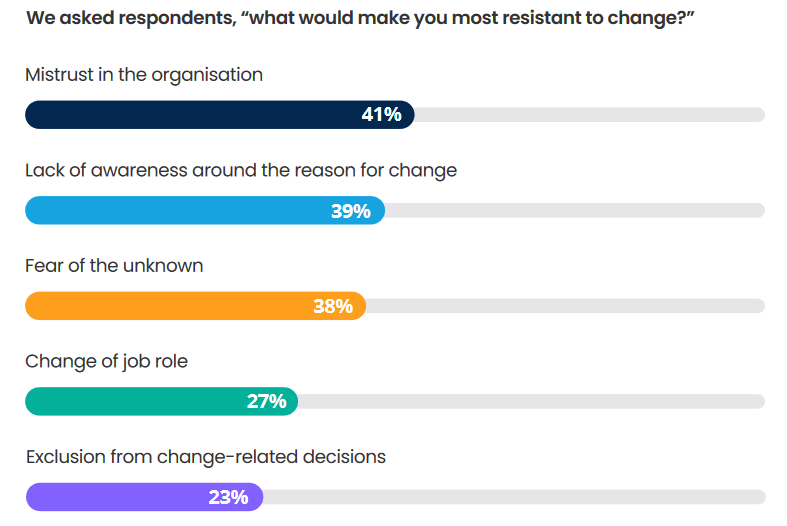
Resistance to organizational change comes from a lack of clear communication between decision-makers and stakeholders. This is relevant in every organization, from schools to digital transformation in eCommerce.
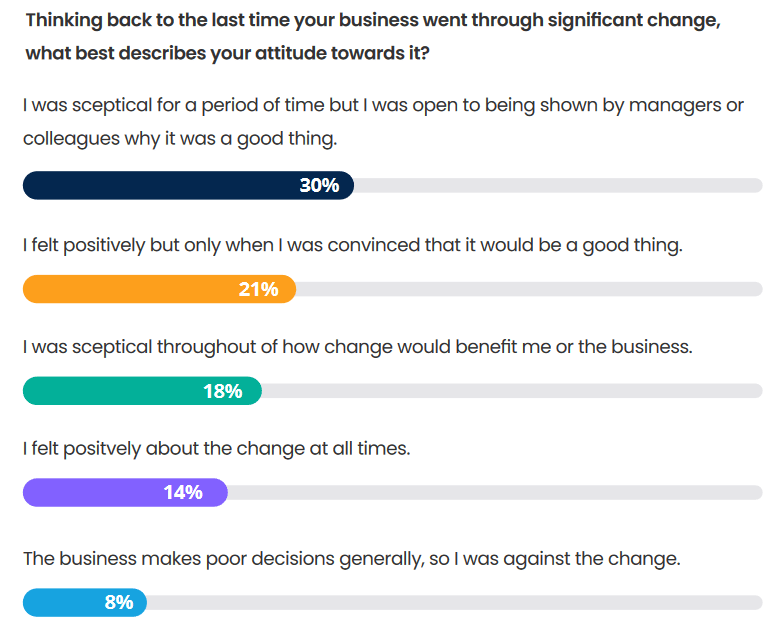
When decision-makers are open to communication, discussion, and feedback, resistance decreases and sentiments become more positive.
A communication plan should reach leadership, teachers, other staff members, and parents. It should communicate:
- The reasons for change.
- Evidence of positive outcomes.
- The new responsibilities of staff and leadership, such as training in new methods or technology.
- A schedule for staff training and development.
- A commitment to supporting staff and parents through the change.
- Opening channels for discussion and feedback, such as web forums, email, or PBX phone systems.
- The schedule for your change management plan.
Clear communication can empower stakeholders to engage with your plans, calming reluctance and even creating excitement around ideas for change.
Execution stage

It’s time to do the thing.
Communicate the plan
The first stage of execution is sharing the communication plan you painstakingly crafted earlier.
You can do this in a variety of ways:
- Create a change management pack that includes all the things you need to communicate.
- Disseminate the pack to staff and parents via physical copies or email.
- Hold meetings with staff and parents to discuss the plan and get feedback.
- Create online spaces for discussion, such as Facebook groups or dedicated web forums.
- Create an FAQ or help desk on your website.
Clearly communicating plans up-front primes stakeholders for change and empowers them to be a part of it.
Staff training and development
Every big change will affect your staff, from digital transformations to policy changes. If you’re halfway through executing your digital transformation and staff are still asking “what is integration architecture?”, you’re in trouble.
Training is essential to preparing staff for the challenges ahead.
- Look at your impact assessment for places where staff skills and your change targets align.
- Identify areas where staff training is required.
- Schedule training sessions.
- Monitor progress.
- Check in with staff frequently to support them through training.
It’s also important to understand the barriers to staff development.
Schools are a high-pressure environment, with teachers juggling larger workloads than ever before.
A 2023 study conducted by the UK government on the working lives of teachers and leaders found that high workloads were a major barrier to training and development.
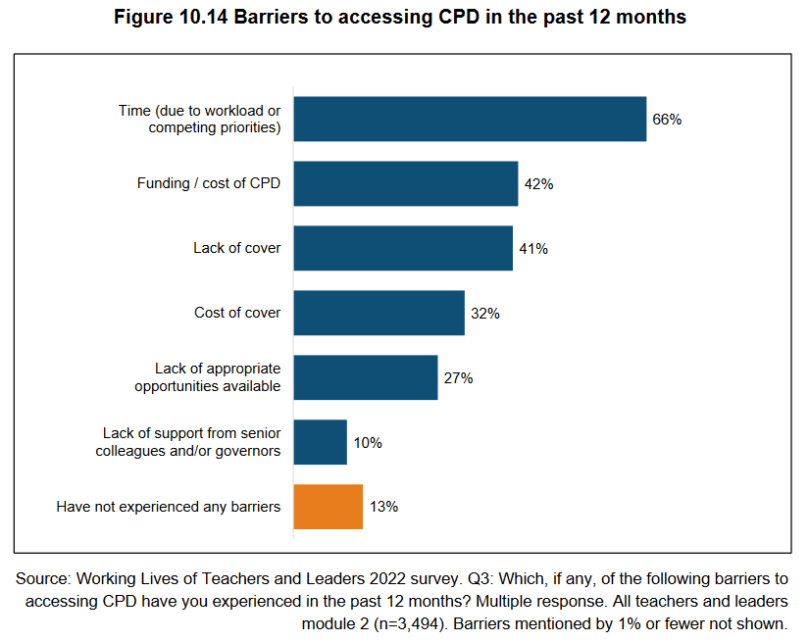
To implement change, staff need to be onboard. Things like technological, curriculum, and policy change require staff training and development.
You see the problem.
If your staff don’t have the time to train and develop, you simply cannot expect to implement large and technically challenging changes.
There is no one-size-fits-all solution to this problem. High workloads and mental health burnout can have numerous causes, from understaffing to budget cuts to post-pandemic stressors.
Setting aside adequate time, being flexible around staff needs, making training a priority, and offering incentives for engagement can help facilitate training and development.
Gather quantitative data
Data analysis is a powerful tool to monitor progress.
Quantitative data like test scores, grades, graduation rates, attendance rates, and student-to-teacher ratios can help you see the impact of your changes and keep you on track to hit your targets.
You can gather this data through school management systems and teacher assessments.
Gather qualitative data
Quantitative data isn’t the only way to monitor progress.
A great way to assess the success of your change management plan is by checking in with the people it affects.
You can do this by:
- Communicating your willingness to listen.
- Holding regular meetings with staff and parents.
- Checking your online discussion forums regularly.
- Being responsive.
If there are problems, your people will let you know. You can assess your successes and failures to further improve your change management plan.
Gathering feedback also works toward your communication strategy. You’re giving stakeholders a voice in your plans for change.
Successfully implementing change management in schools

Free to use image sourced from Pexels
Change is inevitable, and schools need to keep up with an ever-shifting world to give students and teachers the best chance at success.
But change comes with challenges.
With proper preparation and planning, you can overcome any challenge that impedes vital change to your institution.
Following our practical guide will help you utilize evidence, communication, and monitoring to create a comprehensive change management plan that results in positive outcomes.

[…] Upskilling and reskilling of the teaching workforce ensures that educational organizations can successfully implement change management and stay ahead of the […]