

As we come to the week when the Nobel Prizes of 2023 are handed out to remarkable individuals (held on December 10th), we continue on with our ‘Now That’s A Nobel Idea’ series. Celebrating those that contributed greatly to society and remained a huge impact to our world even though they did not win the prestigious prize.
Welcome to the extraordinary world of John Burdon Sanderson Haldane, a visionary scientist whose contributions to genetics, evolutionary biology, and population genetics left an indelible mark on the scientific community. Born on November 5, 1892, in Oxford, England, Haldane’s intellectual journey would take him across continents, blending science, philosophy, and social activism.
We dive into another brilliant scientist who had a nobel idea but unfortunately did not win the Nobel Prize.
Early Life and Education
J.B.S. Haldane hailed from a family deeply entrenched in academia. His Scottish father, John Scott Haldane, was a physiologist, and this scholarly environment likely fueled young Haldane’s curiosity. He even acted as a guinea pig for his father’s experiments. J.B.S. Haldane’s educational journey began at Eton College, followed by undergraduate studies at the University of Oxford. However, the trajectory of his studies was interrupted by the tumultuous events of World War I.

As a response to the call of duty during the war, Haldane temporarily halted his formal education to serve in various capacities. This period of upheaval marked not only a shift in Haldane’s academic pursuits but also a transformative experience that would shape his worldview and later influence his scientific and political endeavors.
After the conclusion of World War I, Haldane resumed his studies with renewed vigor, eventually continuing his academic pursuits and graduating with first-class honours in mathematical moderations and classics. He contributed significantly to the fields of genetics, evolutionary biology, and population genetics. This interruption due to wartime service added a unique dimension to Haldane’s early life, emphasizing his resilience and adaptability in the face of historical challenges.
J.B.S. Haldane Scientific Contributions
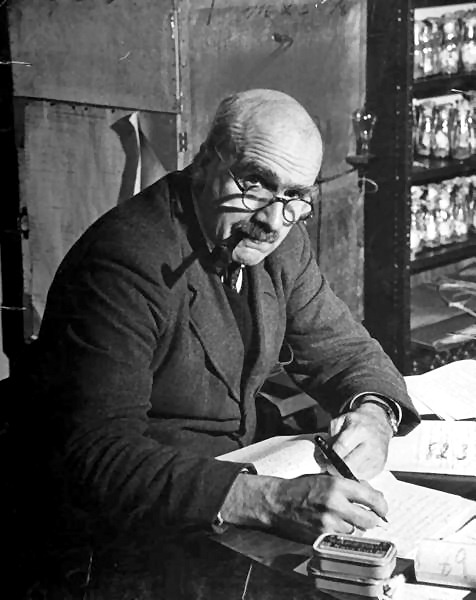
(Photo by Hans Wild, LIFE Magazine)
J.B.S. Haldane’s legacy in science is marked by a diverse array of contributions that have left an indelible mark on various fields. In 1929, his groundbreaking article on abiogenesis introduced the “primordial soup theory,” laying the foundation for the concept of the chemical origin of life. This seminal work became a cornerstone in the study of life’s origins and evolution.
Haldane’s scientific prowess extended to human genetics, where he played a pivotal role in mapping genes for conditions such as haemophilia and color blindness on the X chromosome. His codification of Haldane’s rule, addressing sterility in the heterogametic sex of hybrids in species, became a fundamental principle in understanding reproductive biology.
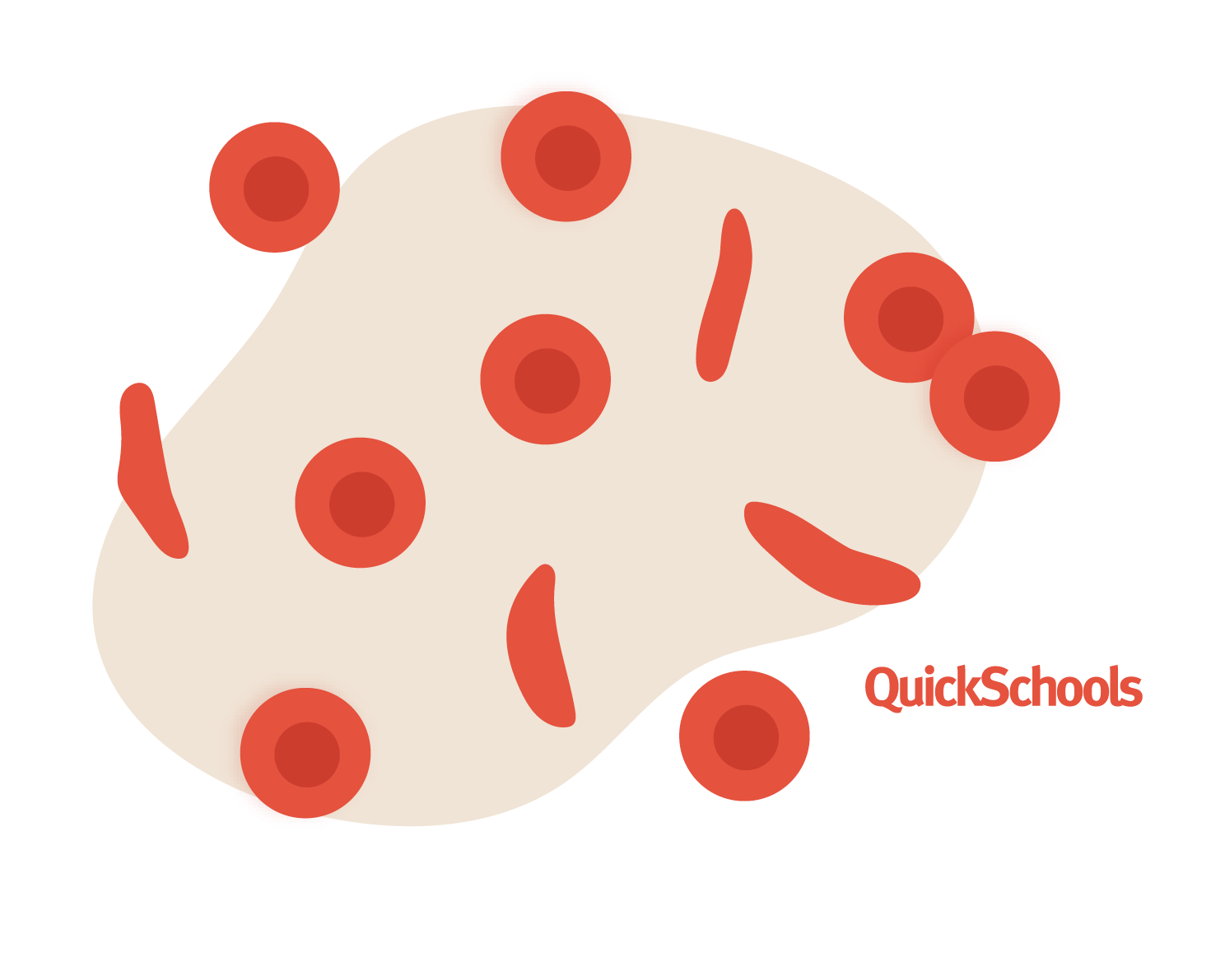
Beyond genetics, Haldane’s visionary thinking encompassed diverse areas. He correctly proposed the relationship between sickle-cell disease and immunity to malaria, a critical insight with implications for public health. Moreover, Haldane was a pioneer in suggesting the central idea of in vitro fertilization, showcasing his foresight into reproductive technologies.
Haldane’s intellectual breadth extended to concepts such as the hydrogen economy, cis and trans-acting regulation, coupling reaction, molecular repulsion, the darwin (as a unit of evolution), and organismal cloning. His ability to traverse multiple scientific domains showcased not only his depth of knowledge but also his capacity to envision the interconnectedness of scientific principles.

J.B.S. Haldane’s influence extended beyond groundbreaking research; he also played a crucial role as an educator. Having taught at esteemed institutions like University College London (UCL), Haldane shared his passion for genetics, evolutionary biology, and population genetics with a new generation of scientific minds.
Social Activism and Political Beliefs
J.B.S. Haldane was not just a scientist; he was also a vocal Marxist and a man deeply engaged in social and political issues. His Marxist beliefs influenced his worldview, and he was an advocate for social justice and equality. Haldane’s commitment to Marxism did not go unnoticed, and it is speculated that his political affiliations might have played a role in the Nobel Committee’s decisions.
J.B.S. Haldane Life in India
In 1957, J.B.S. Haldane made a significant life choice that would not only impact his scientific trajectory but also align with his strong convictions. Critical of the British regime’s handling of the Suez Crisis, Haldane chose to relocate to India, marking a profound shift in both geography and philosophy.
Upon arriving in India, Haldane joined the Indian Statistical Institute in Kolkata in 1957, assuming the role of a research professor. His association with this esteemed institution allowed him to contribute his expertise to the scientific community in a developing nation. During his tenure, Haldane’s intellectual pursuits continued to bridge the realms of genetics, evolutionary biology, and population genetics.
In 1961, Haldane embarked on a new phase of his Indian journey, moving to Odisha with a visionary goal in mind. Driven by a commitment to advancing scientific research, he aspired to establish an Institute for Genetics and Biometry. This move not only showcased Haldane’s dedication to scientific progress but also reflected his belief in fostering indigenous scientific institutions.
The years spent in India were marked by Haldane’s continued scientific contributions, his engagement with the evolving scientific landscape, and his advocacy for building robust research institutions. His decision to relocate to India and actively participate in its scientific community underscored Haldane’s commitment to aligning his principles with his actions, transcending the boundaries of nationality and contributing to the global scientific tapestry.
Rumors Surrounding the Nobel Prize
Despite his monumental contributions to science, Haldane never received the Nobel Prize. Speculations and rumors have swirled around the reasons for this omission. Some attribute it to his political beliefs, suggesting that the Nobel Committee was hesitant to honor a prominent Marxist during the politically charged mid-20th century. Others argue that his outspoken and sometimes controversial views may have influenced the Committee’s decisions. These reasons can be found in historical articles and are still discussed today within the community.
Later Years and Legacy
J.B.S. Haldane continued his scientific endeavors until his death on December 1, 1964, in Bhubaneswar, India. True to his spirit of inquiry, Haldane made a unique posthumous contribution by donating his body for scientific research, a gesture that resonated with his lifelong commitment to advancing knowledge.

Source: Magzter
Today, J.B.S. Haldane’s legacy endures. His scientific insights remain foundational to various disciplines, and his advocacy for social justice and equality reverberates through the corridors of both science and society. While the Nobel Prize may have eluded him, Haldane’s impact on the scientific and political landscapes is a testament to a life devoted to the pursuit of knowledge and social progress.

[…] Nobel Prize Nominee John Burdon Sanderson Haldane […]