

The Nobel Prize has illuminated the paths of many remarkable minds throughout history. Though the award is granted only to a select few, there are those whose influence on literature persists, even in the absence of this esteemed recognition.
In this installment, we dive into the legacy of a literary luminary who continues to captivate readers to this day. Join us as we explore the life and works of the acclaimed Russian-American author, Vladimir Nabokov, who graced the literary world with his brilliance.
Vladimir Nabokov and His Artistry

Vladimir Nabokov, born in St. Petersburg in April 1899, was a polymath known for his masterful storytelling, linguistic prowess, and unique narrative structures. He was a trilingual novelist, poet, professor, translator, and entomologist.
His most celebrated work, “Lolita,” published in 1955, is a controversial yet intricately crafted exploration of obsession and taboo. Nabokov’s literary brilliance extends beyond “Lolita”, encompassing a rich body of work that reflects his deep appreciation for language and the art of storytelling.
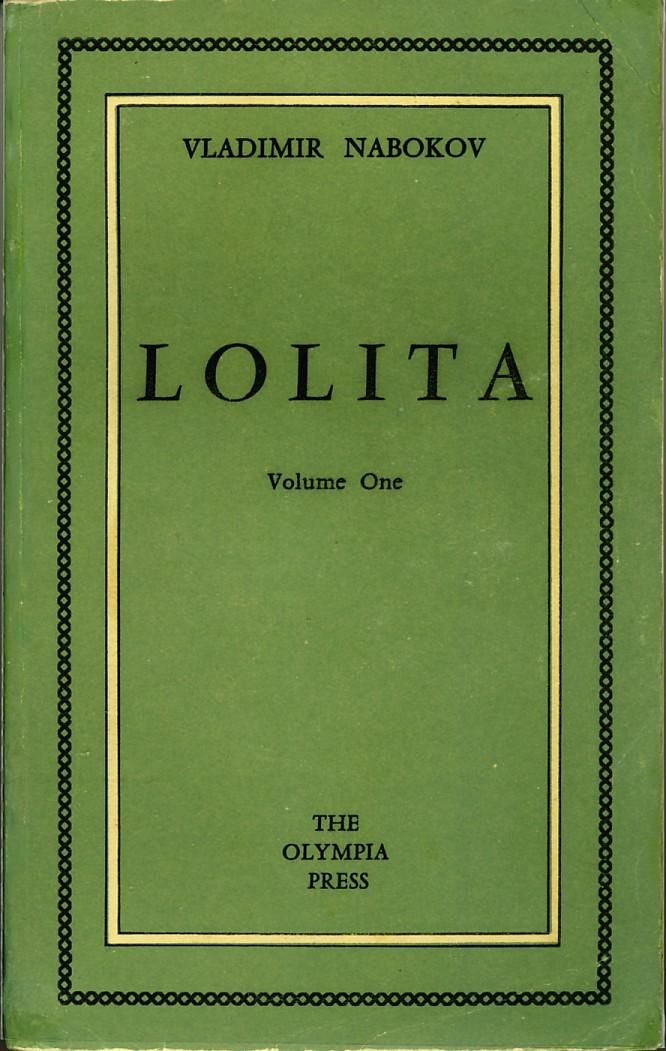
“Human life is but a series of footnotes to a vast obscure unfinished masterpiece”
― Vladimir Nabokov, Lolita
Timeless Works of Vladimir Nabokov
- “Laughter in the Dark” (1932): A tragicomic exploration of love and deception.
- “Despair” (1934): A psychological thriller that delves into the mind of a delusional protagonist.
- “The Gift” (1938): A novel that explores themes of exile, creativity, and the search for meaning.
- “Glory” (1932): A novel blending satire and philosophical exploration, examining the nature of fame and success.
- “Speak, Memory” (1951): An autobiographical work that weaves together Nabokov’s memories, reflections, and literary musings.
- “Lolita” (1955): A controversial yet masterfully crafted exploration of obsession and taboo that remains one of the most iconic novels of the 20th century.
- “Pnin” (1957): A comedic novel that follows the misadventures of Professor Timofey Pnin, offering a satirical look at academia.
- “Pale Fire” (1962): A groundbreaking novel that combines poetry and prose, challenging traditional narrative structures.
- “Ada, or Ardor” (1969): A complex and intricate tale of love and identity set in a fantastical world.
If you find yourself unsure of where to begin when delving into Vladimir Nabokov’s works, The New York Times has a guide to Nabokov’s best books.
The Significance of His Contribution
Throughout his illustrious career, Nabokov’s writing captivated readers with its poetic prose, intricate plots, and exploration of the human psyche. His ability to delve into the nuances of language and perception marked him as a literary virtuoso. For instance, his exploration of memory, identity, and the complexity of human experience. Which has left an imperishable mark on the literary landscape.

In “Speak, Memory,” Nabokov’s autobiographical work, takes readers on a journey through his memories. In this reflective piece, he shares insights into his early life, exile, and love for literature. A poignant quote that captures the essence of Nabokov’s prose is:
“The cradle rocks above an abyss, and common sense tells us that our existence is but a brief crack of light between two eternities of darkness.”
This profound reflection on the transient nature of life showcases Nabokov’s ability to convey complex philosophical ideas with elegance and clarity.
Vladimir Nabokov Ongoing Impact and Legacy
According to Nabokov, an individual who wishes to be a writer must embody three qualities. A storyteller, teacher, and enchanter. He expressed this viewpoint stating, “There are three points of view from which a writer can be considered: he may be considered as a storyteller, as a teacher, and as an enchanter. A major writer combines these three — storyteller, teacher, enchanter — but it is the enchanter in him that predominates and makes him a major writer.”

In his articulation, Nabokov unfolds the multifaceted role of a writer. To him, a storyteller provides entertainment, mental excitement, emotional participation, and the joy of exploring distant realms in space or time. The teacher imparts knowledge, be it morally or with facts. Yet, the enchanter reigns supreme for deeming a writer major.
The Artistry that Defied Nobel Recognition
Despite his literary genius, Vladimir Nabokov was never awarded the Nobel Prize in Literature. However, his name surfaced multiple times in the pool of nominees. A testament to the profound impact of his contributions to world literature.
He garnered various honors. Critics believed that Nabokov, of all literary giants, deserved a Nobel Prize. While the Nobel Prize may have eluded Nabokov, his legacy remains a vibrant force in the literary world. We celebrate Vladimir Nabokov, a luminary whose words continue to echo through the corridors of history. Reminding us that the pursuit of knowledge and artistic expression is a noble endeavor in itself.
Stay tuned for more Nobel ideas and insights into the lives of those who have shaped the world through their intellectual contributions.

[…] Nobel Prize Nominee Vladimir Nabokov […]